
Last week, we looked at the benefits of the Good Driver Discount nationwide across the US. This week, we want to focus on the state of California specifically.
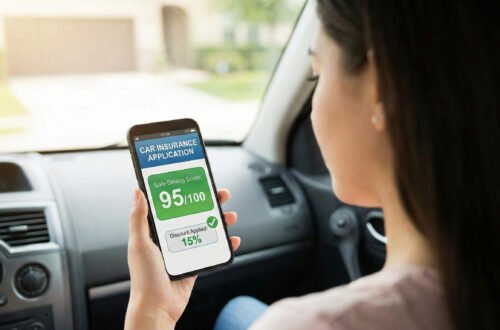
For California residents, maintaining a clean record directly translates to significant financial relief through the Good Driver Discount. California law, specifically Proposition 103, mandates this benefit. It guarantees that qualifying drivers receive at least a 20% reduction on their auto insurance premiums compared to what they would pay without this status.
This guide breaks down exactly what the Good Driver Discount entails, the specific eligibility requirements you must meet, and the conditions necessary to maintain it. You will gain the knowledge needed to determine if you qualify and how to ensure your insurer applies this benefit correctly.
The importance of the good driver discount in auto insurance
For everyday drivers, the Good Driver Discount serves as a critical tool for reducing household expenses. Insurance costs often represent a significant portion of monthly budgets, and a 20% reduction provides substantial relief. This system creates a direct financial link between responsible behavior behind the wheel and the price you pay for coverage.
Beyond individual savings, this discount mechanism promotes safer roads across the state. By attaching a monetary incentive to clean driving records, the state encourages drivers to adhere to traffic laws and drive defensively. This benefits the broader community by theoretically reducing accident rates and severity.
Understanding the value of this discount provides the motivation to pursue it. We now examine exactly how much you can save and how this system operates within the insurance market.
Financial benefits and savings potential
California law mandates a minimum 20% reduction, but understanding what that looks like in real numbers helps clarify the benefit. If a standard insurance policy costs $2,000 annually, a driver with Good Driver status pays $1,600 or less. This $400 difference stays in your pocket simply for following traffic laws.
Some drivers mistakenly assume this specific mandated discount applies nationwide. While many states and insurers offer “safe driver” programs, the California Good Driver Discount is unique because it is a statutory right, not just a marketing perk offered by insurance companies.
To visualize the impact, consider how this discount stacks up against other common adjustments:
| Discount Type | Typical Savings | Basis for Savings |
| Good Driver (CA Mandatory) | 20% Minimum | Driving Record & Experience |
| Multi-Car | 10% – 25% | Insuring multiple vehicles |
| Good Student | 10% – 15% | Academic performance |
| Low Mileage | 5% – 15% | Driving less than average |
Note: The Good Driver Discount often combines with these other discounts, compounding your savings.
Drivers should examine their current policy declarations page. If you believe you qualify but do not see this specific line item reduction, contact your agent immediately to request a review.
Broader impact on driving behavior and insurance market
The existence of this discount encourages proactive behavior. Drivers often seek out defensive driving courses to remove points from their records to regain or maintain eligibility. This fosters a culture of long-term safe practices rather than temporary compliance.
Challenges occasionally arise regarding how insurers interpret specific incidents or lapses in coverage. However, state regulations bind insurers to strict standards. This ensures fairness and prevents companies from arbitrarily denying the discount to eligible drivers.
In a competitive insurance landscape, this mandate levels the playing field. It ensures that responsible drivers do not subsidize high-risk behaviors of others to an unfair degree.
Eligibility requirements and conditions for the good driver discount
Qualifying for this discount requires meeting specific criteria outlined in California Insurance Code Section 1861.025. These are not subjective guidelines; they are legal standards. Insurers assess these conditions when they issue a new policy and every time they renew an existing one. They verify your status by pulling records from the Department of Motor Vehicles (DMV) or equivalent agencies.
Meeting these standards secures your discount and serves as a benchmark for driving responsibility.
Key eligibility criteria
The law establishes three primary pillars for eligibility. You must meet all of them to qualify.
- Three Years of Licensing: You must have held a valid driver’s license for the previous three consecutive years. This ensures you have sufficient experience on the road. This license can come from any jurisdiction, not just California.
- Violation Point Limit: You must have no more than one violation point on your driving record within the previous three years.
- Understanding Violation Points: Think of violation points like demerits on a report card. Under California Vehicle Code Section 12810, minor moving violations (like speeding or running a stop sign) typically count as one point. More serious offenses (like reckless driving) count as two points. Additionally, if you are at fault in an accident that results in property damage exceeding $1,000, this counts as one point. Therefore, a driver with one speeding ticket maintains the discount. A driver with two speeding tickets, or one ticket and one at-fault fender bender, loses it.
- No At-Fault Bodily Injury: You must not have been principally at-fault in any accident that resulted in bodily injury or death within the previous three years. The insurance commissioner sets specific guidelines for determining fault, ensuring insurers cannot assign blame without evidence.
Additional conditions and potential limitations
While the three-year window covers most criteria, the law looks back further for serious offenses. You must not have a conviction for driving under the influence (DUI) or related serious alcohol/drug offenses within the past 10 years. This long-term restriction prevents drivers with a history of dangerous impairment from accessing the discount prematurely.
Drivers arriving from outside the United States or Canada often face hurdles proving their driving history. However, the law provides a “rebuttable presumption.” If you have been licensed in the U.S. or Canada for at least the most recent 18 months and meet the other criteria, insurers generally must presume you qualify, unless they can prove otherwise.
Disqualification usually happens due to exceeding the point limit or failing to report an incident. Errors on DMV records occur. If your record incorrectly shows a violation that places you above the one-point limit, you must contact the DMV to correct it. Once the record reflects the accurate information, you can appeal to your insurer to reinstate the discount retroactively to the date of correction.
Making the most of your good driver discount
The Good Driver Discount offers a straightforward way to reduce insurance costs while encouraging safety. By maintaining a license for three years, keeping violation points to a minimum, and avoiding serious convictions, you secure a statutory right to lower premiums.
Regularly reviewing your driving record ensures you receive the benefits you earn. If you notice a discrepancy or if your premium seems high despite a clean record, consult your insurer. Verify that they applied the discount correctly. Taking these small administrative steps empowers you to maximize your savings.
Reflect on your daily driving habits. Every time you follow the speed limit or brake early to avoid a collision, you actively protect your financial standing. Safe roads lead to smarter insurance choices.
Further Readings & Resources
The following sources and links are accurate as of the publication date of this article.
- California Department of Insurance Good Driver Definition Flyer: https://www.insurance.ca.gov/01-consumers/105-type/95-guides/01-auto/lca/upload/Good-Driver-Definition-Flyer.pdf
- California Insurance Code Section 1861.025 on Justia: https://law.justia.com/codes/california/code-ins/division-1/part-2/chapter-9/article-10/section-1861-025/



One comment on “The Good Driver Discount in California”